
06
Antonio Gala, universal Andalusian
He went to the seashore at midnight.
I knew that God was there,
and that the sand and you
and the sea and I and the moon
were God. And I worshipped him.
‘Playa de El Palo’, taken from the poetry collection Testamento andaluz, published in 1994.
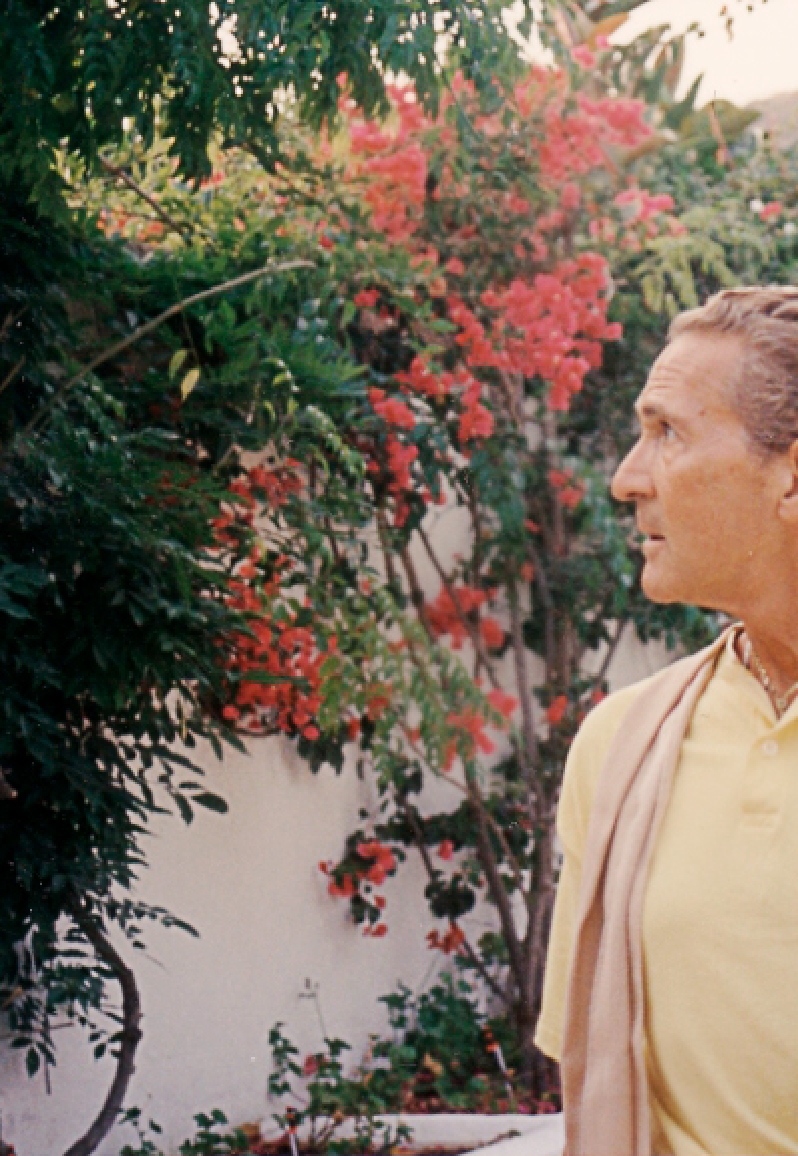
Born in Brazatortas (Ciudad Real, 1930), but raised in Córdoba, Antonio Gala became a naturalised Andalusian. In fact, in the house where he was born, in that town, there is a plaque that reads: ‘The Córdoba writer Antonio Gala was born here’. That the playwright, novelist, poet and columnist had a southern soul is, at this point, beyond dispute. His ironic and cultivated sense of humour and the exquisite balance he always maintained between cultured speech without falling into snobbery and an explicit fondness for the popular made him a charismatic figure. Linked to his ever-present walking stick.
He studied law at the University of Seville (to his father’s satisfaction); philosophy and literature at the universities of Seville and Madrid; and political science and economics at the University of Madrid. But since 1963, he has devoted himself exclusively to literature. He published his first book of poetry, Enemigo íntimo, in 1959, which won him second prize in that year’s Adonais Prize. Before that, he had been a member of the Cántico group and founded two magazines, Aljibe and Arquero de Poesía, with Gloria Fuertes and Julio Mariscal Montes.
He began his career in Madrid as a man of the theatre, writing plays such as Los verdes campos del Edén (The Green Fields of Eden, 1963), winner of the Calderón de la Barca National Prize; Los buenos días perdidos (The Lost Good Mornings, 1972), winner of the National Literature Prize; Anillos para una dama (Rings for a Lady, 1973); ¿Por qué corres, Ulises? (1975); Petra regalada (1980); Samarkanda (1985); Carmen Carmen (1988); La Truhana (1992), etc. He suffered Franco’s censorship in works such as ¡Suerte, campeón! (1973) and worked with the cream of Spanish theatre, both in directing and acting.
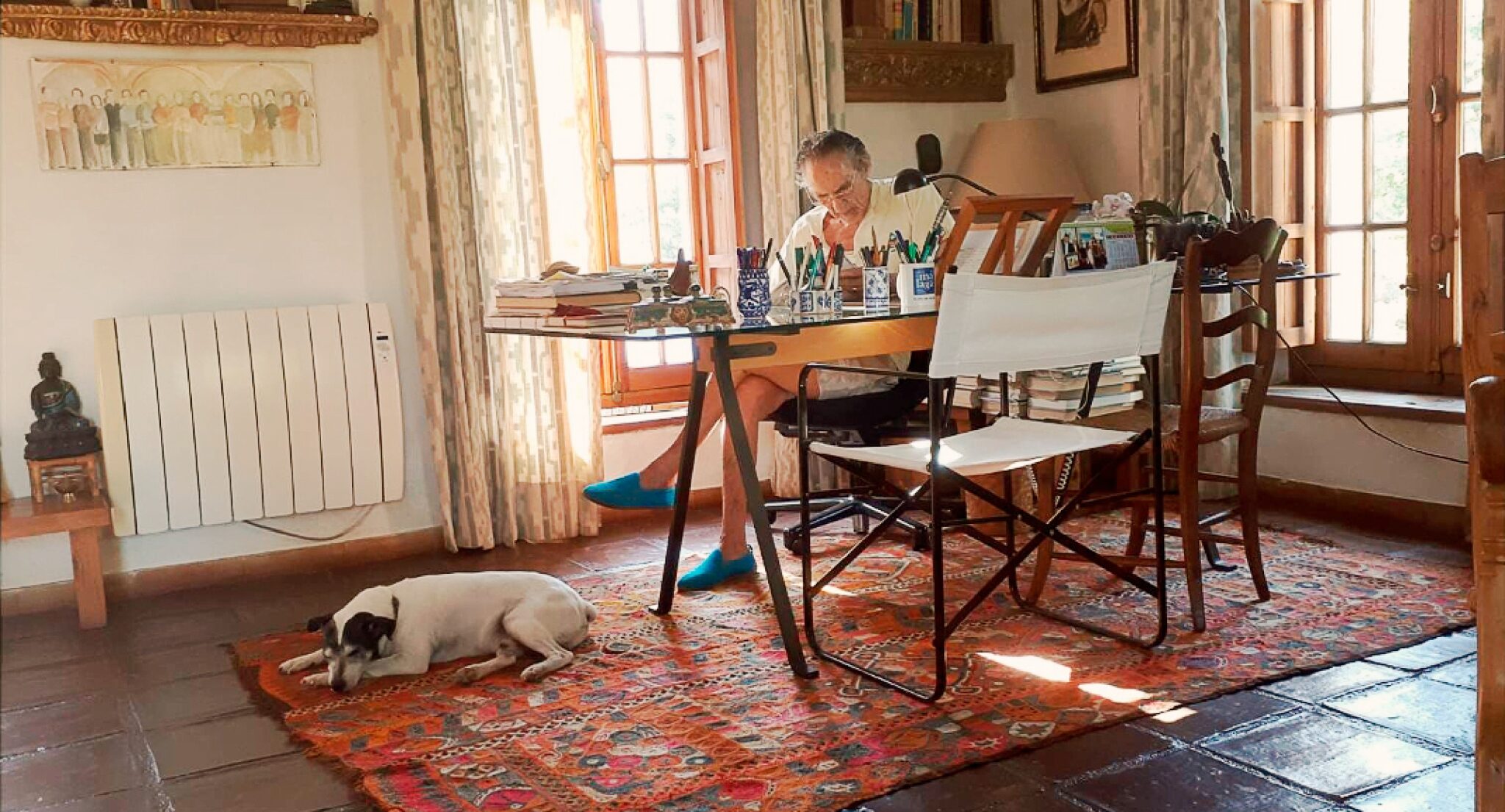
His career as a novelist began in the early 1990s with El manuscrito carmesí (The Crimson Manuscript, 1990), which won him that year’s Planeta Prize.
He followed this with La pasión turca (1993), adapted for the cinema by Vicente Aranda, starring Ana Belén. He followed this with Más allá del jardín (1995), also made into a film by Pedro Olea, starring Concha Velasco and Mari Carrillo; La regla de tres (1996); Las afueras de Dios (1999)… until Los papeles de agua (2008), his last novel. He also published short stories: El corazón tardío (The Late Heart), Los invitados al jardín (The Guests in the Garden) and El dueño de la herida (The Owner of the Wound).
As a poet, he resisted publishing his poetry until 1997, when he compiled it in a book entitled Poemas de amor (Love Poems), which achieved unprecedented success for a book of poems. This was followed by El poema de Tobías desangelado (The Poem of Tobias Without the Angel), in which he narrated Tobias’ journey without the company of the angel.
He also wrote television scripts, including Si las piedras hablaran (If Stones Could Talk, 1972), presented by Natalia Figueroa and directed by different directors: it took a tour of the most important historical sites in Spain.
Paisaje con figuras (Landscape with Figures, 1976) featured the most representative figures in Spanish history, from Goya to Rosalía de Castro, Murillo and Ana de Austria, and was presented by Antonio Gala himself. Some of these scripts have won prestigious awards both in Spain and abroad.
From 1976 to 1998, he wrote a weekly column for the newspaper El País, which, once completed, was published in book form. Among them, the following are particularly noteworthy: Charlas con Troylo (1981), Dedicado a Tobías (1988), Cuaderno de la Dama de Otoño (1985), La soledad sonora (1989), La casa sosegada (1998), etc. With La Tronera, he appeared daily in the pages of the newspaper El Mundo from 1992 to 2015, to voice his discontent with what he called “professional politicians”, although he also touched on social, artistic and religious issues, among others. He also wrote articles for Pueblo, Sábado Gráfico and Actualidad Española, among others.
07
Discover all the activities at the Antonio Gala House Museum, La Baltasara-Alhaurín el Grande